Emergency Lockouts · Mississauga
Seized & Jammed Lock Opening
The shop's lever handle goes down as usual, but the latch inside the mortise case never pulls back. Staff are waiting on the sidewalk with their coffees, the door is locked, and the handle is simply moving air.
Call now · open 24/7(289) 805-7422In plain words
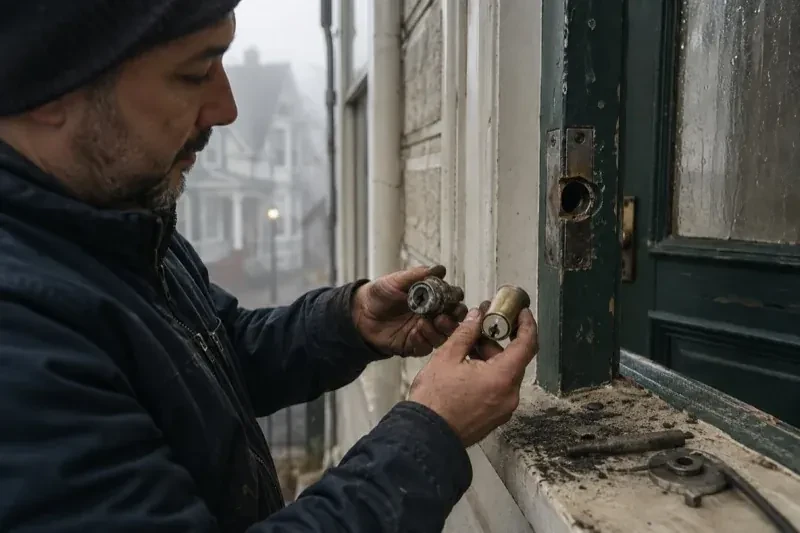
Most seized locks can be saved, and keeping your existing hardware is the aim. A cylinder that has stopped turning is usually recoverable with cleaning and fresh internal parts. A failed tailpiece is a small component swapped without touching the rest of the lock. A bolt bound by the door needs adjustment, not new hardware. Replacement is the answer for a plug or shell that is worn, damaged or hollowed out by corrosion beyond what cleaning and parts can fix, and then the new cylinder is matched to your keyway and finish and, where possible, keyed to the key already in your pocket.
How the visit goesEvery time you pull the key out of the side door it comes away gritty. The lock has been sticky since the salt trucks started running, and today it has gone from sticky to solid, with the bolt still thrown.
Seized & Jammed Lock Opening · Mississauga
How the visit goes
- 1
Levers, thumb-turns and mortise cases
Lever handles and mortise locks add parts that a plain deadbolt does not have, and each can jam on its own. A lever that drops without retracting the latch can have a tired return spring or a worn hub inside the case, though latch engagement, linkage, or the spindle can produce the same symptom. A thumb-turn that will not move can be a bent spindle, a stripped drive or a bolt pinned by the frame. On older houses and commercial doors the mortise case itself may be packed with decades of dust and dried grease. The locksmith works the lever, key and thumb-turn separately and feels where resistance starts, which locates the fault before the case is opened.
- 2
Taking the load off a bound bolt
When the door is the cause, the opening is a matter of leverage rather than tools. The locksmith lifts, pushes or pulls the door to bring the bolt back into line with its pocket while the key turns, and the bolt slides home. With the door open, the reason is dealt with: hinge screws tightened or replaced with longer ones that reach the framing, a hinge shimmed to raise a dropped door, the strike plate moved or its edge dressed with a file, the bolt pocket deepened with a sharp chisel, or a weatherstrip trimmed. The lock is then thrown and retracted with the door closed until it moves without any pressure on the door.
- 3
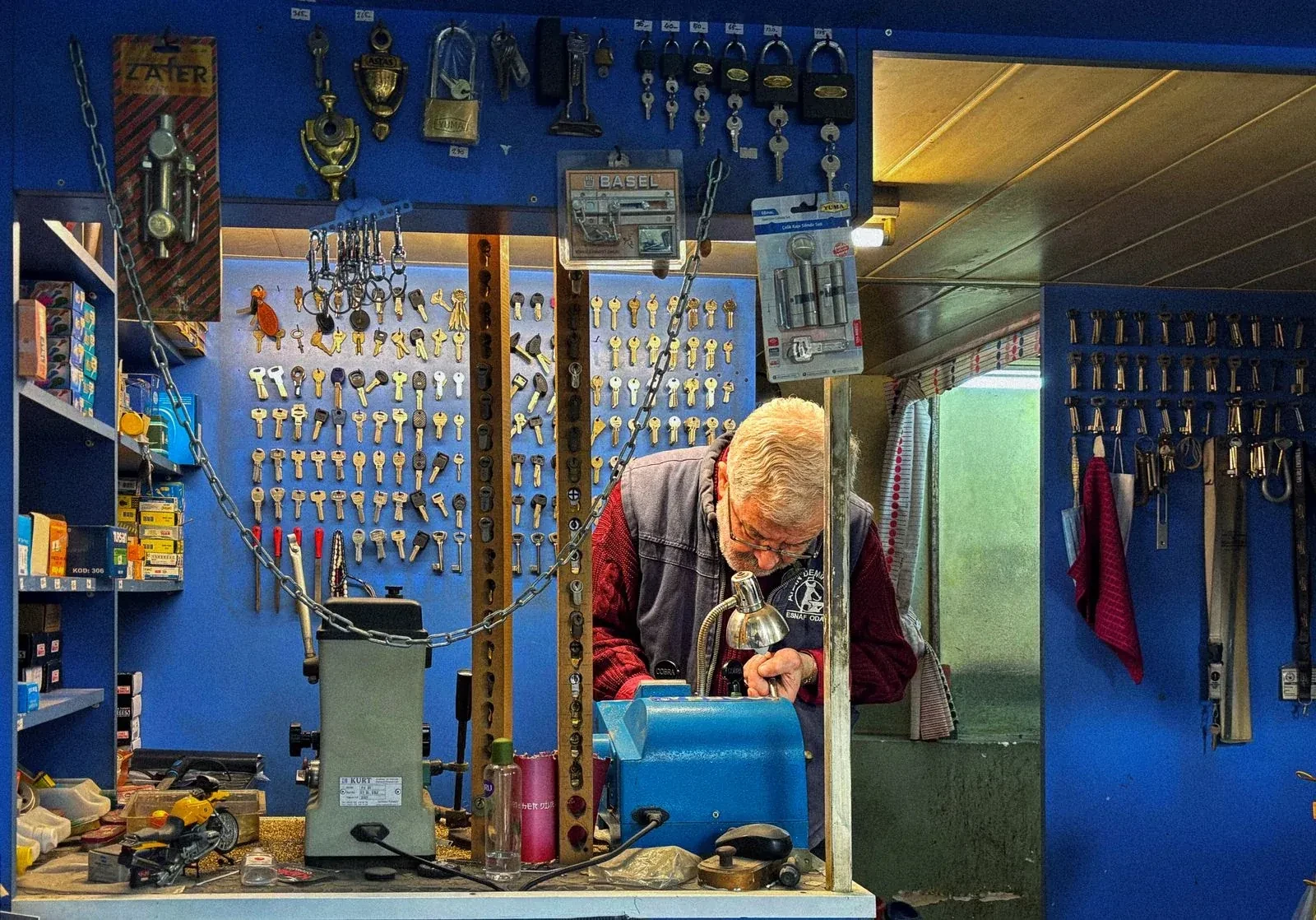
Keys that match the lock again
Where a worn or drifted key was part of the jam, you now hold a key cut from the code or from a fresh master, and every spare has been tried in the lock. Retire copies that needed force, and cut future spares from the good key rather than from each other, since each generation of copying adds error. Label the keys if several locks are involved. If the cylinder was replaced and pinned to your existing key, the whole house is still on one key. Keeping a written note of the keyway and, where it exists, the key code makes any future key a simple cut.
In the van
- Long hinge screws
- Replacement cylinder
- Replacement tailpiece or cam
- Penetrating lubricant
- Cylinder springs, pins and cap
What affects the quote
- 1
Inside door or outside door
A jammed bedroom or office privacy lock is generally a lighter job than a weather-exposed exterior deadbolt, and a mortise lock on an interior door sits between the two.
- 2
Signs of an earlier struggle
A key snapped in the plug, a twisted cylinder or a bent latch from a screwdriver adds an extraction or a repair to the opening, and the locksmith points that out before quoting it.
- 3
Matching finish and keyway
A replacement that has to match an unusual finish or a restricted keyway takes a specific part rather than a stock one, and the quote reflects the part.
Same fees day, night or weekend.
Seized & Jammed Lock Opening: questions
What should I tell you on the phone?
Say what the key does: refuses to turn, spins without effect, or works only when the door is pushed or pulled. Name the lock type if you can, whether it is a deadbolt, knob, lever or an old mortise lock, and which side of the building the door faces. Mention recent weather, any spray that went into the keyway, any other door you can use, and whether anyone is inside. That short list decides the tools that come.
Why do locks jam more in winter?
Two reasons meet in the same season. Freeze-thaw weather sends meltwater into the keyway by day and freezes it by night, and cold thickens any old grease or oil that has been sprayed into the pins. At the same time dry, heated indoor air shrinks wood doors so bolts move in their pockets. Doors on the shaded or windward side get the worst of it. A dry lubricant, a keyhole cover and a check of the strike after the first hard frost take care of most of it.
Why is it always the shaded side of the building that seizes?
The face of a building that never sees direct sun stays colder and damper, so ice in a keyway lasts days longer there and condensation sits in the cylinder rather than drying off. Wind-driven rain and snow tend to hit the same face. Those doors deserve a keyhole cover, a storm door where one fits, and a lubricant check before the season turns, and they are often the first lock a locksmith asks about.
Lockout Services
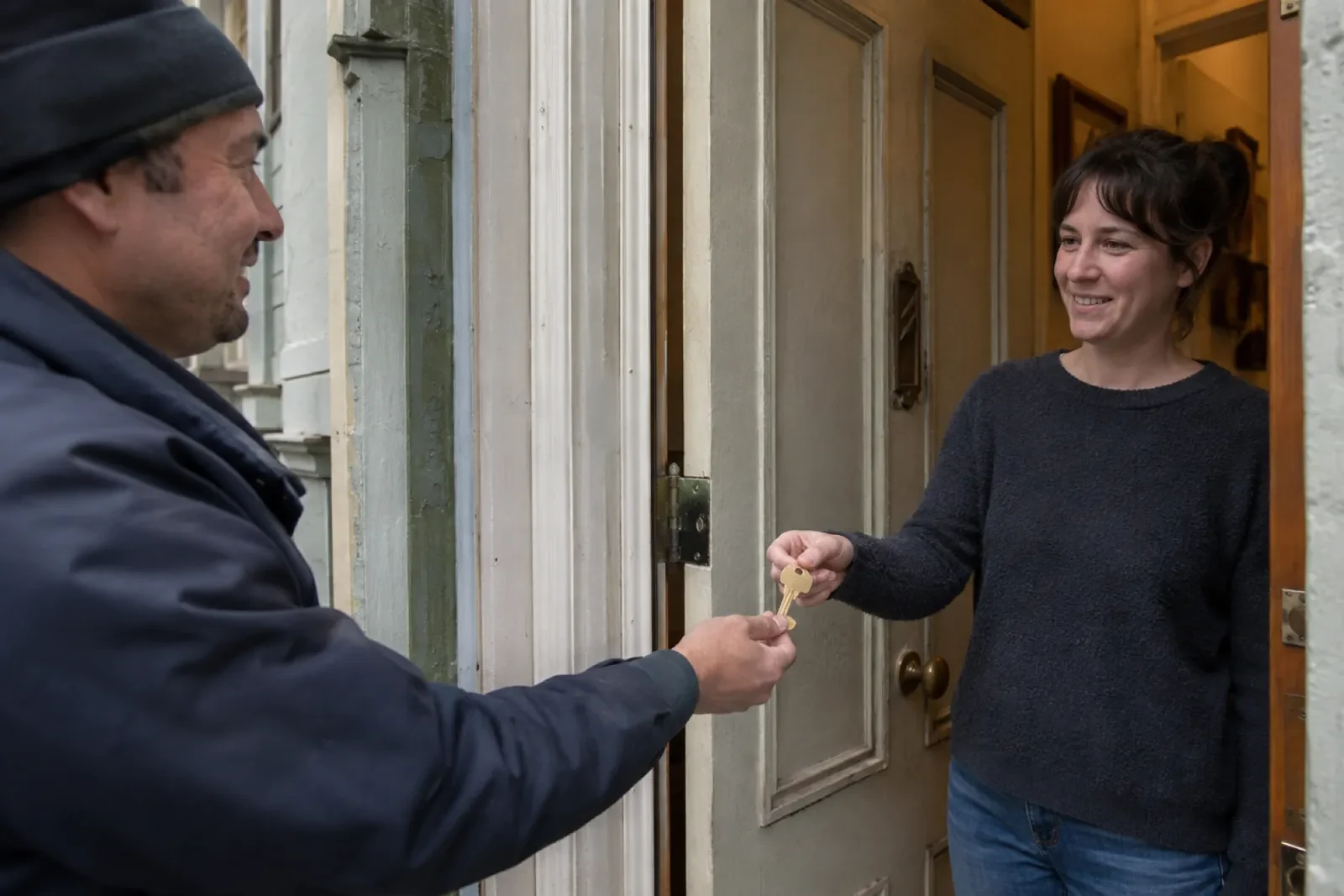 EmergencyHome Lockout ServiceYou reached the front step with the groceries, patted every pocket twice, and the house key is simply not there.
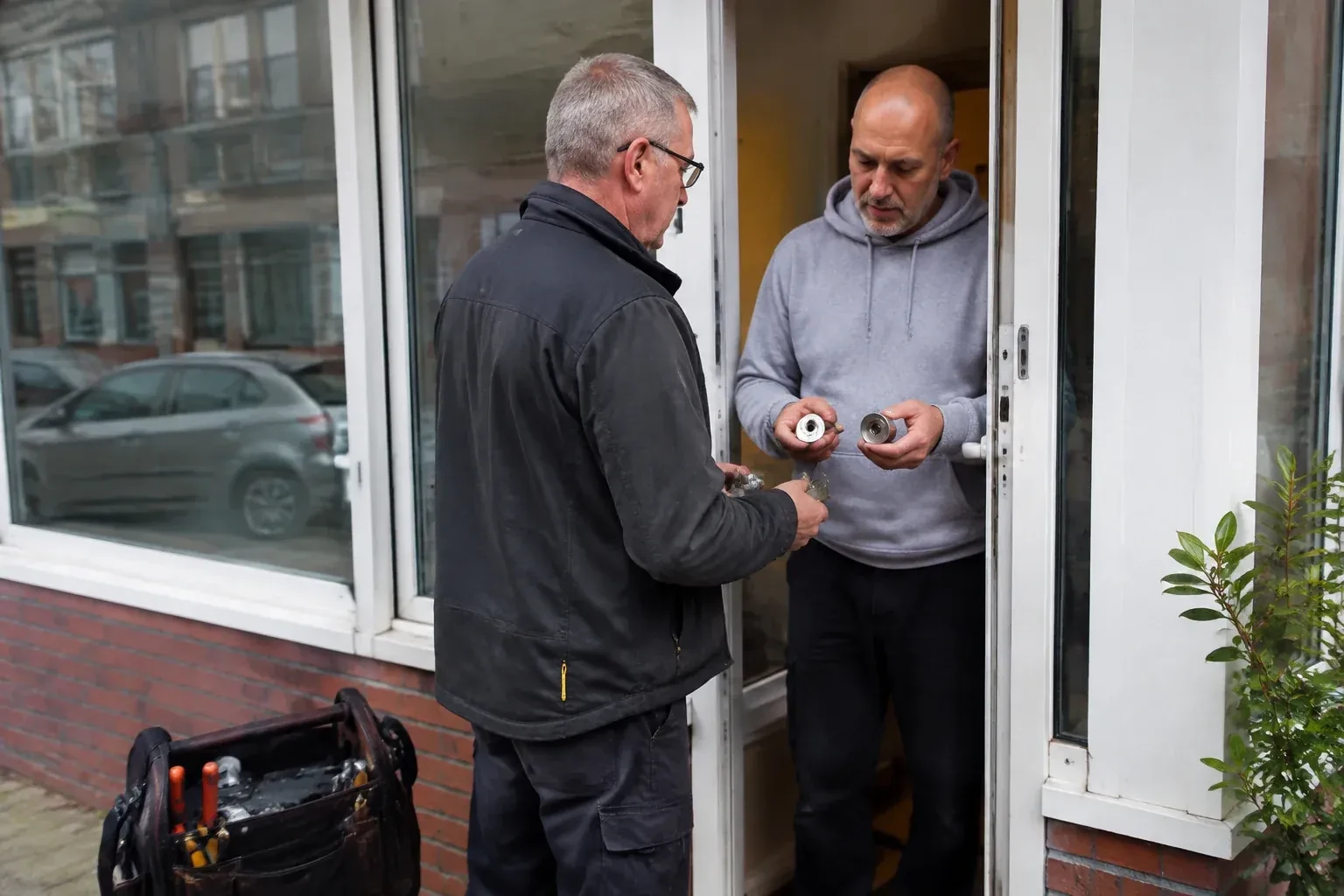 EmergencyBusiness Lockout ServiceThe heavy glass door has been scraping the threshold for weeks.
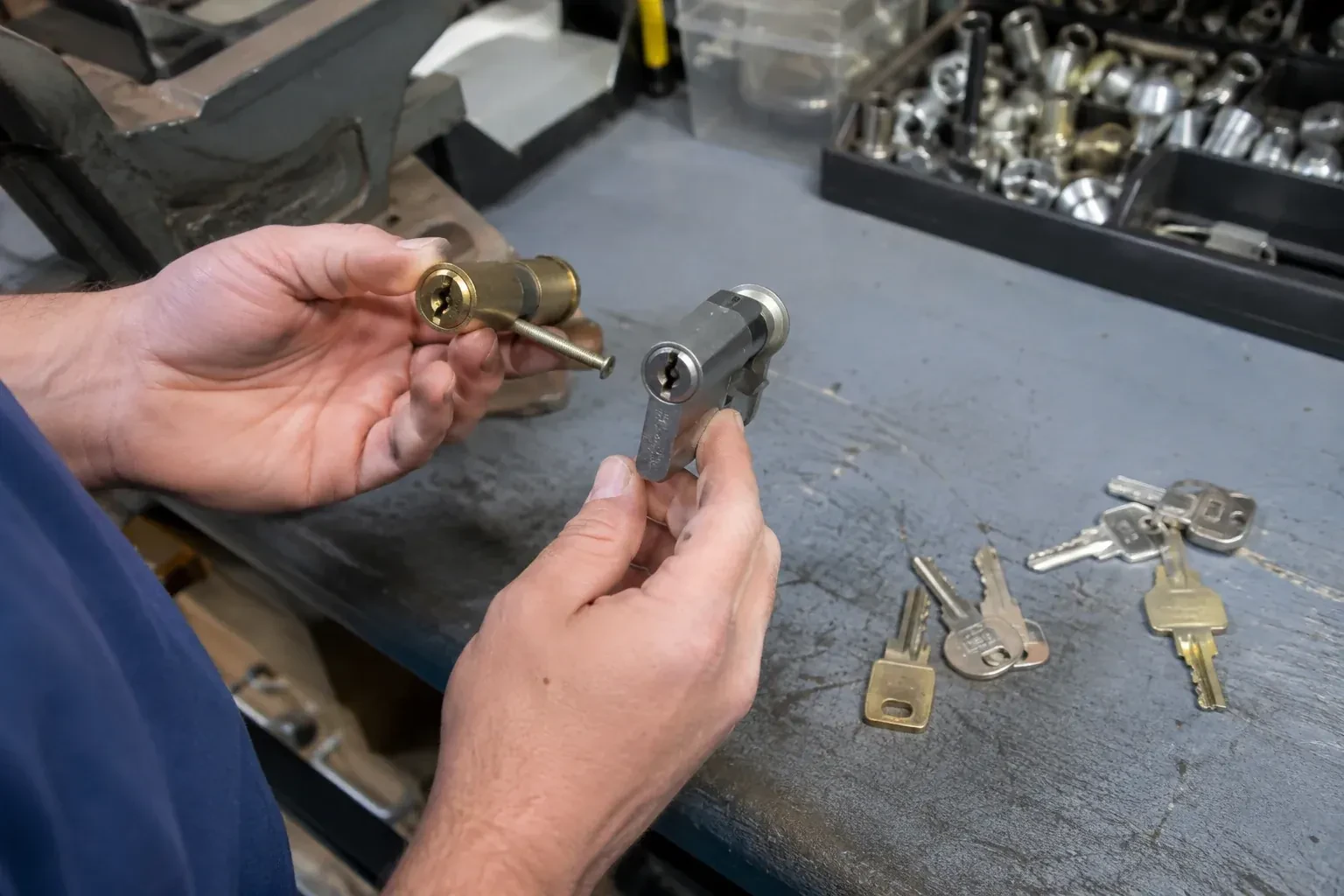 EmergencyBroken Key ExtractionThe key went in like any other morning, you turned it, and something gave with a small metallic click.
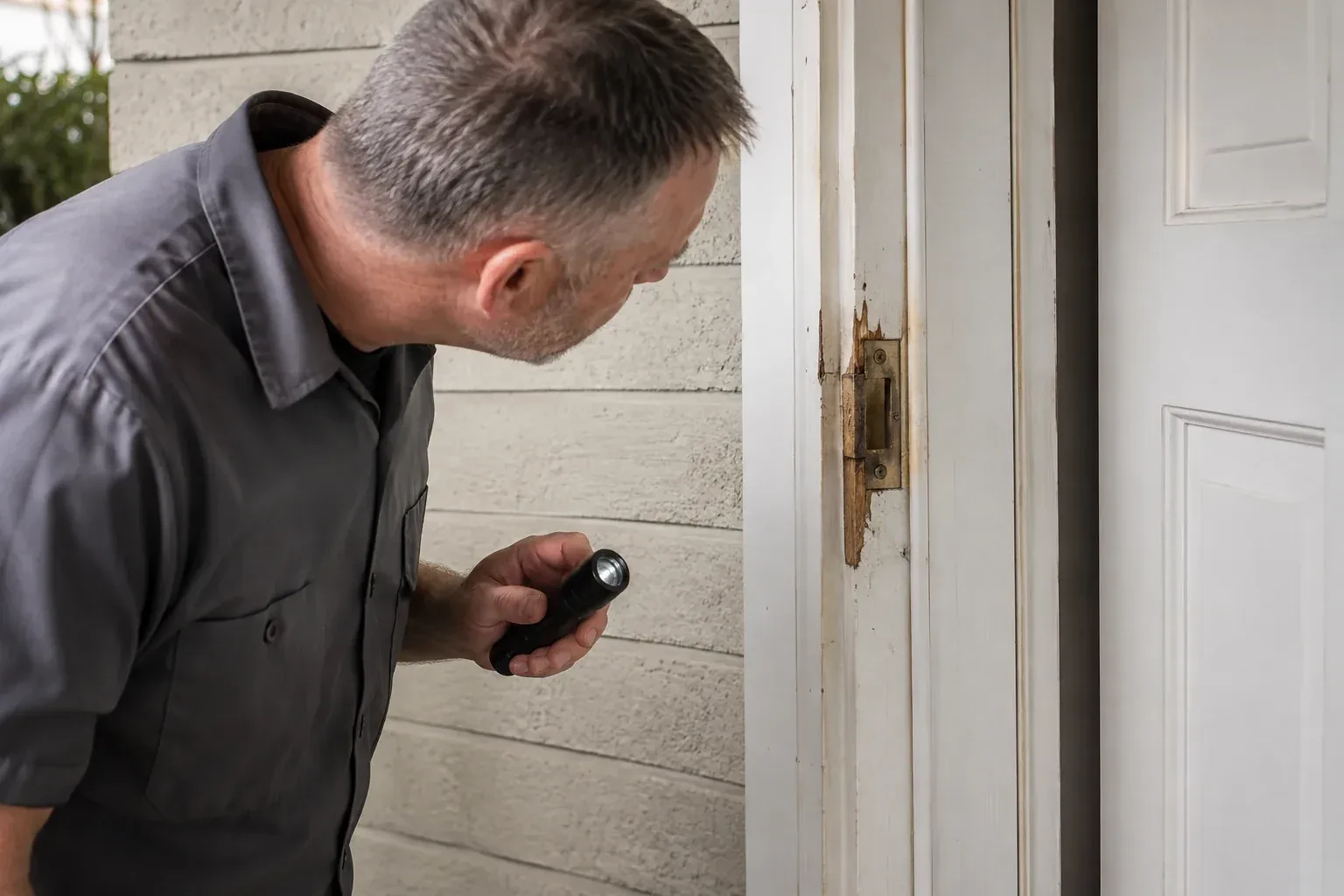 EmergencyBreak-In Damage Lock RepairSomeone smashed the little window beside the door, reached in and turned the thumb-turn.
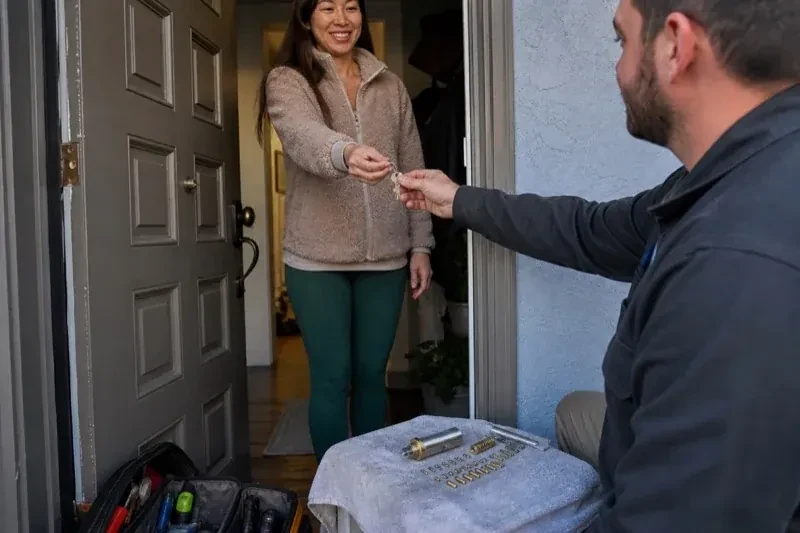 EmergencyLost Keys — Same-Visit RekeyYou were shovelling the driveway after dark and the ring must have slid out of your coat pocket somewhere under a metre of snow.
Seized & Jammed Lock Opening near you
Peel, Ontario
Mississauga information
- Town
- Mississauga, Peel, Ontario
- In business
- 12 years
- Hours
- Open 24/7 · nights, weekends and holidays, same fees
- Phone
- (289) 805-7422
- Visits
- On-site assessment preferred. Request a visit or call.
What the census means at the door
38%
Homes of every age. About 38% of homes in Mississauga were built in 1980 or earlier, according to the 2021 Census.
In an area of varied housing ages, rekeying is the one job that fits every door. Old cylinders and new ones both take fresh pins, so a household moving into either kind of home can start with keys that nobody else holds.
37%
Single-detached houses make up about 37% of homes in Mississauga (2021 Census).
Attached housing turns over more often than detached, so rekeying between tenants or owners is a constant. Because suite doors tend to be standard, the job is usually a straightforward pin change and a fresh set of keys cut on site.
Open 24/7
Request a visit
The shop's lever handle goes down as usual, but the latch inside the mortise case never pulls back.
Call now · open 24/7(289) 805-7422- On-site assessment preferred
- Same fees day, night or weekend
- 12 years in business